Part 1: My Mother Threw Away My 11-Year-Old Son’s Insulin—Then a Stranger Called Me From a Gas Station
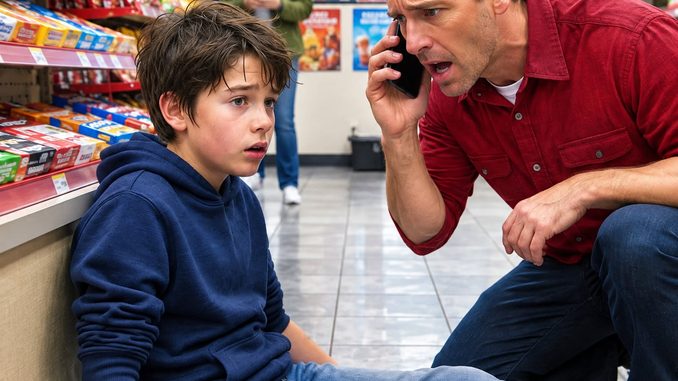
On the third day of my son’s vacation with his grandparents, a stranger called to tell me he’d found my eleven-year-old boy trembling inside a gas station. Ripley had walked four miles looking for help because my mother had thrown his insulin into a lake.
When I called her, she laughed.
“He’s pretending, Marla. Stop making everything so dramatic.”
My name is Marla, and I work as a dental assistant in Green Bay, Wisconsin. I’m raising my son, Ripley, who was diagnosed with type 1 diabetes when he was seven.
His condition requires daily insulin. Without it, his blood sugar can rise dangerously, leading to a life-threatening medical emergency.
My parents never accepted that explanation.
My mother, Odette, believed that healthy food and prayer could cure almost anything. My father, Fenton, distrusted doctors and regularly complained that medications were unnecessary.
When Ripley was first diagnosed, Mom blamed me.
“You’ve been feeding him too much sugar. That’s why he’s sick.”
No matter how many times I explained his condition, she refused to listen.
Still, Ripley adored his grandparents. Every summer, he asked to visit their lakeside cabin in Michigan’s Upper Peninsula.
This year, I finally agreed.
Before leaving, I packed his insulin pens, extra supplies, glucose tablets, and continuous glucose monitor. I also wrote detailed instructions explaining his insulin schedule and what to do in an emergency.
I taped the instructions to their refrigerator.
“Mom, he needs insulin every day, including before meals. You cannot skip it.”
She sighed impatiently.
“Marla, I raised three children. I know how to take care of a boy.”
The first day passed without problems. Ripley’s glucose readings appeared normal on my phone.
On the second day, his numbers began climbing.
I immediately called Mom.
“Is Ripley taking his insulin?”
“Of course. You’re worrying over nothing.”
That evening, his readings rose again. Shortly afterward, the monitoring app displayed a signal-loss warning.
I called repeatedly before Mom finally answered.
“His sensor came off while he was swimming,” she explained. “He’s perfectly fine.”
Something about her voice bothered me, but I couldn’t reach Ripley directly.
By the third afternoon, neither of my parents was answering.
At 4:10 p.m., an unfamiliar number appeared on my screen.
“Hello, is this Ripley’s mother?”
“Yes. Who’s calling?”
“My name’s Calvin. I own a gas station along Highway 2. Your son just came inside. He says he walked four miles from a cabin.”
My stomach tightened.
“He’s shaking badly, ma’am. He’s been vomiting, and he looks very sick.”
“Please put him on the phone.”
A few seconds passed.
“Mom?”
Ripley’s voice sounded weak and confused.
“Sweetheart, where’s your insulin?”
He started crying.
“Grandma thr:ew it in the lake. She said the medicine was making me sick. She took off my sensor, too.”
I gripped the phone.
“When did she do that?”
“Tuesday.”
Two days earlier.
My son had been without insulin for nearly forty-eight hours.
I asked Calvin to call 911 immediately. He described Ripley’s unusually deep breathing and a fruity smell on his breath, symptoms that made me fear diabetic ketoacidosis.
Then I called my mother.
“Did you throw Ripley’s insulin into the lake?”
“He doesn’t need all those chemicals,” she replied. “He’s just upset because I won’t give him junk food.”
“Mom, he’s seriously ill. He’s at a gas station four miles from your cabin.”
She laughed.
“He’s faking it to get attention.”
I could hear Dad agreeing in the background.
I ended the call and grabbed my car keys.
Before I reached the driveway, Calvin called again.
His voice was trembling.
“Marla, the ambulance is coming, but your boy just collapsed. He’s on the floor, and I’m trying to keep him breathing.”
I stood beside my car, holding the phone so tightly my fingers hurt.
My son was hundreds of miles away, and the only person trying to save him was a stranger.
Part 2: My Parents Denied My Son His Insulin for Two Days—Then the Hospital Called the Police
I was already driving when Calvin told me Ripley had collapsed on the gas station floor. My hands trembled against the steering wheel as I listened to him describe what was happening.
“Calvin, is my son still breathing?”
“Yes, ma’am. He’s breathing. I’ve turned him onto his side, and I’ve got my jacket under his head.”
“Please stay with him until the ambulance arrives.”
“I won’t leave him.”
The drive from Green Bay to Michigan’s Upper Peninsula would take more than three hours. I knew I couldn’t reach Ripley before the paramedics, but I couldn’t bear sitting at home while my son fought for his life.
Calvin kept the phone nearby while following the emergency dispatcher’s instructions. Whenever he could, he spoke gently to Ripley about fishing, football, and the grandchildren he loved.
“Your mom’s coming, buddy. Just hang in there.”
At 4:41 p.m., I heard ambulance sirens through the phone.
The paramedics began emergency treatment and arranged for Ripley to be transported to a children’s hospital in Marquette. By the time I arrived, he had been admitted to intensive care.
I found him lying beneath a hospital blanket, with IV lines attached to his arms and monitors beside his bed.
He looked frighteningly pale.
The doctor explained that his blood sugar had exceeded 600 and that he was suffering from severe diabetic ketoacidosis. His body had become dangerously acidic, and his kidneys were showing signs of injury.
“He needs close monitoring,” she told me. “He’s very fortunate someone recognized the emergency and called for help.”
I sat beside Ripley and held his hand.
For two days, he’d been asking his grandparents for medication that kept him alive. Instead of helping him, they’d dismissed his symptoms and taken away his ability to contact me.
The hospital documented his condition and contacted the appropriate authorities.
That evening, officers visited my parents’ cabin.
They recovered Ripley’s discarded glucose sensor from the kitchen trash. During their investigation, they also located his insulin supplies in the lake near the dock, consistent with what Ripley had told Calvin.
My parents admitted they’d stopped his prescribed treatment because they believed a natural approach would be healthier.
Investigators began examining their actions as possible child neglect and endangerment.
The following morning, my mother called from the police station.
“Marla, you need to explain that this was a misunderstanding. We’re your parents.”
I stepped into the hospital hallway.
“You threw away Ripley’s insulin.”
“We were trying to help him.”
“He was hospitalized because you refused to give him medication he needs to survive.”
She became angry.
“Are you seriously going to let the police treat us like criminals?”
I thought about my son lying in intensive care.
“I’m going to tell them exactly what happened.”
Then I ended the call.
Ripley remained in the ICU for four days. On the second morning, he finally opened his eyes and squeezed my fingers.
“Mom?”
I leaned closer.
“I’m right here, sweetheart.”
Tears gathered in his eyes.
“I’m sorry I didn’t call sooner. Grandma took my phone. She said I’d only make you worry.”
I brushed his hair away from his forehead.
“You did nothing wrong. You found someone who could help you.”
He looked down at the blanket.
“I thought if I walked far enough, somebody would let me use a phone.”
I held him carefully, relieved that he’d survived the journey.
After Ripley was discharged, I followed up with investigators and made it clear that my parents would no longer have unsupervised contact with him.
Their case continued through the legal system, but I refused to pressure anyone to overlook what they’d done.
A week later, Ripley asked me something unexpected.
“Mom, can we go back to that gas station?”
I looked at him.
“Why, honey?”
“I want to thank Calvin.”
So the following Saturday, we drove north along Highway 2.
When we entered the small gas station, Calvin was standing behind the counter wearing a faded Green Bay Packers cap.
He looked up, saw Ripley, and immediately came around the counter.
“Well, there’s my buddy!”
Ripley hurried into his arms.
Calvin hugged him tightly, his eyes filling with tears.
Then he looked at me.
“My wife had type 1 diabetes,” he explained quietly. “She passed away six years ago. When I saw how your boy was breathing, I knew something was terribly wrong.”
He rested a hand on Ripley’s shoulder.
“I couldn’t save my wife,” he said, his voice breaking. “But I’m grateful I was there when your son needed somebody.”
For the first time since that terrible afternoon, Ripley smiled without fear.
And watching the two of them together, I realized that the stranger who’d answered my son’s desperate request for help had shown him more protection than his own grandparents.
Part 3: My Parents Threw My Son’s Insulin Into a Lake—Then the Police Asked Him What Really Happened
Three days after we visited Calvin’s gas station, an investigator called to arrange a follow-up interview with Ripley.
My son had already told the hospital staff what happened at his grandparents’ cabin, but the authorities needed a clearer account of the days before his collapse.
I agreed, provided the conversation would be handled by someone experienced in interviewing children.
Ripley was nervous when I explained it to him.
“Am I in trouble because I left the cabin without telling Grandma?”
I sat beside him on the couch.
“No, sweetheart. You left because you needed help. The adults are the ones being investigated.”
He nodded, although I could tell he was still worried.
The interview took place in a quiet room at a child advocacy center. A trained interviewer spoke with Ripley while I waited nearby.
Afterward, the investigator explained what my son had shared.
On Tuesday morning, Ripley had checked his glucose reading before breakfast. His number was higher than usual, so he asked Grandma for his insulin.
Instead of giving it to him, Odette had taken the medication from his bag.
“She told me I was too young to understand what was healthy,” Ripley explained.
When he protested, she removed the sensor from his arm and took his phone.
My father had been present.
According to Ripley, Fenton told him that doctors had frightened our family into believing he needed medication.
By Wednesday afternoon, Ripley was constantly thirsty and increasingly weak. He’d asked several times to call me, but his grandparents refused.
On Thursday, after he began vomiting, my mother told him to rest.
He waited until both grandparents were occupied outside before leaving the cabin.
He remembered passing a gas station on our drive there and hoped someone would let him use a telephone.
He walked for miles despite feeling progressively worse.
When the investigator finished explaining, I sat silently for several moments.
My son hadn’t simply wandered away.
He had understood that something was seriously wrong and had tried to save himself when the adults responsible for him wouldn’t listen.
The investigator also showed me a copy of the emergency medical report.
It documented Ripley’s severe dehydration, dangerously elevated blood glucose, and treatment for diabetic ketoacidosis.
The recovered medical supplies and my parents’ statements were being evaluated alongside those records.
“Will they be arrested?” I asked.
“That depends on the evidence and the prosecutor’s decisions,” she answered. “But we’re treating these allegations seriously.”
I appreciated that she didn’t promise an outcome she couldn’t guarantee.
That evening, my sister called.
She’d heard about the investigation from our father.
“Mom says you’re exaggerating what happened,” she told me.
“Ripley spent four days in intensive care.”
“I know. I’m just telling you what they’re saying.”
I explained the missing insulin, the discarded sensor, and the four-mile walk.
My sister went quiet.
Then she asked a question I hadn’t expected.
“Did Dad really know she took his medication?”
“Yes. Ripley told the investigator he was there.”
She sighed.
“I didn’t realize it was that bad.”
Neither had I, until Calvin called.
After hanging up, I found Ripley at the kitchen table drawing a picture.
It showed a small gas station beside a road, with a man standing near the entrance.
“Is that Calvin?” I asked.
Ripley smiled.
“Yeah. I want to send it to him.”
I sat beside my son and helped him find an envelope.
For years, I’d tried to convince my parents that Ripley’s diabetes was real.
Now I understood that the most important thing wasn’t making them believe me.
It was making certain they would never again have the power to ignore my son’s medical needs.
Part 4: My Parents Blamed My Son for His Medical Emergency—Then His Hospital Records Exposed What They Had Done
Two weeks after Ripley came home from the hospital, my parents’ attorney contacted me.
He explained that Odette and Fenton were facing child neglect and endangerment allegations in Michigan. Prosecutors were reviewing the medical records, witness statements, and evidence recovered from their cabin.
My parents wanted me to submit a letter describing them as loving grandparents who had simply misunderstood Ripley’s condition.
I refused.
“They were given written instructions,” I told the attorney. “They knew he needed insulin, and they deliberately withheld it.”
He said he understood and ended the conversation.
That evening, my mother called from an unfamiliar number.
“Marla, are you really going to let this destroy our family?”
I recognized her voice immediately.
“Mom, Ripley nearly died.”
“He was fine when he left the cabin. We didn’t know he was going to collapse.”
“You knew he was vomiting. You knew he was weak. And you took away his medication.”
She sighed impatiently.
“We were trying to get him healthy without depending on chemicals.”
“Insulin isn’t optional for him.”
My father took the phone.
“You’re letting doctors turn you against your own parents,” he snapped. “That boy has always been dramatic.”
I thought about Ripley walking four miles while seriously ill, desperately searching for someone who would believe him.
“He wasn’t being dramatic. He was trying to stay alive.”
I ended the call and blocked the number.
The following week, I met with the prosecutor handling the case.
She explained that investigators had documented the instructions I’d left at the cabin, including the insulin schedule and emergency contact information.
They also had the hospital’s findings and Calvin’s statement describing Ripley’s condition when he arrived at the gas station.
Most importantly, Ripley had consistently explained that his grandparents had intentionally taken his medication.
“Your parents are claiming they didn’t understand the seriousness of his condition,” the prosecutor said.
I opened the folder I’d brought.
Inside were copies of messages I’d exchanged with my mother over the years.
Several included explanations from Ripley’s diabetes care team. Others showed Mom acknowledging that insulin was part of his daily treatment.
I also provided the messages she’d sent during his vacation, including her assurance that he was taking his medication.
The prosecutor reviewed them carefully.
“These may help establish what they knew,” she said.
For the first time, I felt that someone was examining the difference between an honest mistake and a deliberate refusal to follow medical instructions.
Meanwhile, Ripley was struggling with nightmares.
Sometimes he woke up asking whether his insulin was still in the refrigerator. Other nights, he wanted me to check his glucose monitor even when the readings were normal.
His diabetes specialist recommended additional emotional support, and I arranged counseling with someone experienced in helping children recover from frightening medical events.
One afternoon, Ripley asked whether Grandma and Grandpa were going to jail.
“I don’t know yet,” I answered. “That’s for the court to decide.”
He looked down at his hands.
“Are they mad at me?”
I moved closer.
“They might be upset about what’s happening, but you didn’t cause it.”
He was quiet for a moment.
“Grandma said I was making everyone miserable because I wouldn’t stop asking for insulin.”
I felt my chest tighten.
“Ripley, asking for medicine you need is never something to be ashamed of.”
He leaned against me, and I held him until he was ready to talk about something else.
A few days later, Calvin called to tell us he’d received Ripley’s drawing.
He’d hung it behind the gas station counter.
“Every customer asks about it,” he said, laughing softly. “I tell them it’s from a very brave young man.”
Ripley grinned when I repeated the message.
Then Calvin invited us to visit when Ripley felt ready.
That night, I checked my son’s supplies before bed, just as I’d done every evening since his diagnosis.
The insulin was safely stored. His monitor was working. His emergency contacts were updated.
And for the first time since that terrible afternoon, Ripley fell asleep without asking whether someone might take his medication away.
The court case wasn’t finished.
But my son was beginning to understand that he was safe at home, and I intended to keep it that way.
Part 5: My Parents Nearly Killed My Diabetic Son—But the Stranger Who Saved Him Became Part of Our Family
Three months after Ripley collapsed inside Calvin’s gas station, my parents appeared in court in Michigan.
I attended the hearing with our attorney, carrying copies of Ripley’s medical records and the instructions I’d left at their cabin.
My mother, Odette, sat beside my father, Fenton. Neither looked in my direction when I entered.
The prosecutor outlined what investigators had established: my parents had knowingly withheld Ripley’s insulin, removed his glucose monitor, and prevented him from contacting me while his condition deteriorated.
The court also reviewed the hospital’s findings and Calvin’s account of the afternoon Ripley arrived at his gas station.
My parents’ attorney argued that they’d acted out of misguided beliefs rather than an intention to hurt their grandson.
But the prosecutor pointed to the written instructions, my mother’s messages, and their refusal to seek medical help after Ripley became seriously ill.
Ultimately, both accepted responsibility through negotiated pleas to child neglect charges.
The judge imposed probation, mandatory education concerning medical neglect, and other conditions determined by the court. They were also prohibited from having unsupervised contact with Ripley.
When the hearing ended, my mother approached me in the hallway.
“Marla, surely we can put this behind us now.”
I looked at the woman who had once taught me to ride a bicycle and stayed awake when I had childhood fevers.
For years, I’d believed those memories meant she would always protect my son.
“I hope you understand what happened someday,” I said. “But Ripley’s safety comes first.”
She started crying.
I walked away without changing my mind.
Back in Green Bay, Ripley continued seeing his diabetes specialist and counselor.
His physical recovery was progressing well, although he still became anxious whenever his glucose readings changed unexpectedly.
We worked on helping him feel confident managing his condition again.
He practiced explaining his symptoms to trusted adults, keeping emergency contacts accessible, and asking for help whenever something felt wrong.
One afternoon, he surprised me by asking whether we could visit Calvin again.
“Do you think he’d take me fishing?” he asked.
I smiled.
“Why don’t we call and ask?”
Calvin answered before the third ring.
When Ripley asked about fishing, the older man laughed.
“Buddy, I’ve been waiting for you to ask.”
That summer, we returned to Michigan’s Upper Peninsula.
This time, we stayed at a small motel near Highway 2, and I personally managed Ripley’s medication and supplies.
Calvin met us early the next morning, wearing his familiar Packers cap and carrying two fishing rods.
Ripley followed him toward the lakeshore, excitedly asking questions about bait and which fish lived in the water.
I stayed nearby, watching them talk.
For the first time in months, Ripley seemed completely relaxed around an older adult.
Over the following days, Calvin told us more about his late wife.
She’d lived with type 1 diabetes for decades, and he’d learned to recognize warning signs because they managed her condition together.
“She was the strongest person I ever knew,” he told Ripley one afternoon. “Taking insulin didn’t make her weak. It helped her live her life.”
Ripley listened carefully.
“My grandma said I shouldn’t need it.”
Calvin shook his head.
“Your grandma was wrong, son. There’s nothing shameful about needing medicine.”
Ripley looked toward the lake, then nodded.
Before we left, Calvin showed us a small box behind his gas station counter.
Inside were glucose tablets and a juice box.
“I keep these here now,” he explained. “Just in case somebody needs help.”
Ripley grinned.
“Even if it’s not me?”
“Especially then.”
By the end of our visit, they’d already made plans to fish together the following summer.
Driving home, I glanced at Ripley in the rearview mirror.
He was holding a photograph of himself and Calvin standing beside the lake, smiling with their fishing rods.
“Mom?”
“Yes, sweetheart?”
“Do you think Calvin could be like another grandpa?”
I felt tears gathering in my eyes.
“I think he’d be honored.”
Ripley smiled and returned to looking at the photograph.
My parents were still alive, but I no longer trusted them with my son’s care. I couldn’t erase what they’d done, and I wasn’t going to force Ripley into a relationship that made him feel unsafe.
Calvin, meanwhile, had never asked us for anything.
He’d simply helped a frightened child who walked into his gas station needing someone to believe him.
And he continued showing up long after the emergency was over.
Every summer afterward, we made the trip north. Ripley and Calvin went fishing, shared stories, and talked about everything from football to school.
The man who had once been a stranger became someone my son could depend on.
My parents had taught Ripley that the people closest to him might ignore his cries for help. Calvin taught him something far more important: family isn’t always determined by blood. Sometimes it’s the person who opens the door when you need help most.
THE END.
Leave a Reply