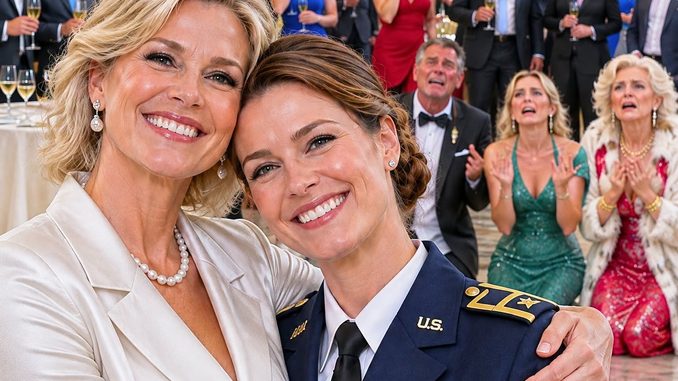
PART 1: THE NIGHT MY FATHER ABANDONED ME IN A BLIZZARD
I was eighteen years old when my parents demanded the $15,000 I had spent three years saving for college. When I refused to hand it over to my older sister, my father drove me more than a hundred miles from home and abandoned me beside a deserted Pennsylvania highway during a snowstorm.
My name is Audrey Whitcomb, and everything changed on January 18, 2024. Until that Thursday evening, I had believed that no matter how unfairly my parents treated me, they would never deliberately put my life in danger.
We lived in Butler, Pennsylvania, in a respectable two-story house where appearances mattered more than anyone’s feelings. My father, Richard, worked as a manager for a regional equipment company, while my mother, Marilyn, devoted herself to maintaining our family’s reputation.
My sister, Brianna, was twenty-five and had always been their favorite. When she damaged her first car, Dad replaced it, but when my aging Honda Civic developed mechanical problems, he told me to work additional shifts.
I spent weekends cleaning rental cabins near Moraine State Park and worked at Giant Eagle grocery store whenever my schedule allowed. By sacrificing holidays, weekends, and summers, I managed to save $15,000 toward studying business administration.
Brianna had taken a different path, opening a wedding decorating business called Ever After Events. Unfortunately, her expensive promises, poor financial decisions, and mounting business expenses left her struggling with creditors.
One afternoon, Mom summoned me into the dining room, where Dad and Brianna were already waiting. A yellow legal pad sat on the table with the figure $15,000 written across the top and circled twice.
“Your sister needs financial assistance to keep her business operating,” Dad announced.
“That’s my college money. I’ve been saving it for three years.”
Mom explained that Brianna had immediate obligations, while I supposedly had plenty of time to pursue my education. Brianna barely looked up from her phone before casually promising to repay me when her spring bookings came through.
“When exactly would you pay me back?”
“Seriously, Audrey? Why are you making such a big deal out of this?”
I reminded them that I had earned every dollar through exhausting work and wasn’t responsible for my sister’s business decisions. Dad became furious when I refused to cooperate.
“You’re eighteen. You have years to go to college, but your sister needs that money now.”
“I’m not giving away my savings to cover her mistakes.”
Dad abruptly stood and ordered me to get my coat because we were going for a drive. Although I felt uneasy, I followed him outside, hoping we could discuss the disagreement privately.
I climbed into his Silverado wearing only a thin denim jacket. We drove away from Butler in silence as darkness settled over the Pennsylvania countryside and snow began falling heavily.
After passing Brookville, I noticed that we were traveling farther north than I expected. The GPS eventually showed that we were more than a hundred miles from home, and the worsening weather made me increasingly nervous.
“Dad, where are we going? Please turn around.”
“Are you going to transfer the money to Brianna?”
“No. That money is for my education.”
Without warning, he pulled into an isolated roadside turnout surrounded by dark pine trees. Snow swirled across the windshield as he turned toward me with an expression I had never seen before.
“You want to make adult decisions? Then deal with adult consequences. Get out.”
“Dad, there’s a blizzard outside! You can’t leave me here!”
He pushed open the passenger door and ordered me out of the truck. I stumbled onto the icy shoulder, expecting him to reconsider once he saw how frightened I was.
Instead, he slammed the door and drove away, leaving me alone in the freezing darkness. I immediately called him, but my call went straight to voicemail.
When Mom finally answered, I begged her to send someone because I was stranded more than a hundred miles from home. Her response made me realize that my father’s cruelty wasn’t something she intended to stop.
“Maybe the cold will teach you how much stress you’ve caused this family.”
She disconnected the call before I could answer. With my phone battery nearly exhausted, I dialed 911 and desperately tried to explain my location.
The dispatcher instructed me to find shelter, but there was nothing nearby except trees, snow, and an empty highway. My battery dropped to four percent as the wind cut through my jacket.
Then, through the blinding snowfall, I noticed a pair of headlights approaching slowly along the shoulder.
I couldn’t tell whether the driver had come to rescue me or whether I was about to face another danger.
PART 2: THE STRANGER WHO SAVED MY LIFE
The approaching headlights belonged to an old, dark green Subaru Outback that slowed beside the highway. Its driver, an elderly woman with silver hair, lowered the passenger window and asked whether I was the young woman emergency dispatchers were trying to locate.
“Sweetheart, are you the girl the county dispatch is looking for?”
I nodded, barely able to speak because my entire body was trembling from the cold. The woman introduced herself as Evelyn Porter, a retired school bus driver who had spent thirty years navigating Pennsylvania roads in difficult weather.
“Get inside before you freeze. I’ve driven through enough snowstorms to know you shouldn’t be standing out here.”
I climbed into the passenger seat, struggling to fasten my seat belt with my stiff fingers. Evelyn helped me, covered my legs with a heavy blanket, and turned the heater to its highest setting.
She spoke with the 911 dispatcher and arranged to meet emergency responders at a nearby gas station. Shortly afterward, my phone battery died completely, and I began crying as the reality of my parents’ abandonment finally overwhelmed me.
At the gas station, paramedics examined me and wrapped me in emergency blankets. Once they determined that I was physically stable, a sheriff’s deputy asked whether I had relatives who could take me home.
“I don’t think I have a home to return to.”
Evelyn immediately offered me her guest room for the night. She didn’t know anything about me beyond what had happened on the highway, but she was willing to help when my own parents had refused.
The following morning, I woke in an unfamiliar bedroom with floral curtains and my damp boots drying beside a radiator. Downstairs, Evelyn was preparing eggs and toast while wearing a faded Pittsburgh Steelers sweatshirt.
“Good morning, sweetheart. There’s breakfast waiting, and I found you some slippers.”
The slippers were bright purple with ridiculous embroidered cats, and Evelyn joked that they improved my appearance considerably. Her kindness made the situation feel less frightening, although I knew I couldn’t hide from reality forever.
My phone had been charging overnight, and nineteen messages were waiting when I switched it on. Dad demanded that I return home and apologize to Brianna, while Mom accused me of embarrassing the family.
Neither parent asked whether I had survived the snowstorm. Their messages treated me as a disobedient daughter who had deliberately disappeared rather than someone they had abandoned.
Then my aunt Denise, Mom’s younger sister, called. She explained that Marilyn had told relatives I had thrown a tantrum, jumped out of Dad’s truck, and run away to punish them.
“Audrey, is that really what happened?”
“No. Dad forced me out during a blizzard, more than a hundred miles from home. Mom knew exactly where I was and refused to help.”
Denise was horrified when I explained everything, including the demand for my college savings and Evelyn’s rescue. She told me to remain somewhere safe and promised to check on me that evening.
Later that afternoon, Evelyn accompanied me to a local bank. I transferred my entire $15,000 into a new account that my parents couldn’t access, changed my passwords, and updated my security information.
Afterward, Evelyn insisted that I purchase proper winter clothing because my denim jacket offered almost no protection. I hesitated at the register, worried that spending money would make college even more difficult to afford.
“Audrey, that money is supposed to protect your future. Staying alive is part of having a future.”
That evening, someone knocked firmly on Evelyn’s front door. I immediately feared that Dad had discovered where I was staying and had come to force me home.
Evelyn approached the entrance cautiously while I remained behind her. When she opened the door, I discovered that the visitor wasn’t my father at all.
It was Aunt Denise, carrying a duffel bag and a cardboard box filled with my belongings.
PART 3: THE ARMY GAVE ME THE FUTURE MY FAMILY TRIED TO TAKE
Aunt Denise had brought my laptop, important documents, winter boots, and whatever clothing she could collect before Dad returned from work. I hugged her tightly, relieved that someone from my family finally understood how seriously my parents had betrayed me.
Over tea, Denise explained that Mom was telling neighbors I had suffered an emotional breakdown and disappeared voluntarily. Dad was presenting himself as a devastated father, while Brianna continued complaining about the money she needed for her wedding decorating business.
“I can’t go back there, Aunt Denise. I don’t think I’ll ever feel safe in that house again.”
“Then you won’t go back,” Evelyn replied. “You can stay here while you figure out your next step.”
Evelyn established simple expectations: I would help with household chores, purchase my groceries when possible, and develop a realistic plan for supporting myself. Her rules were fair, and for the first time, I experienced what it felt like to live with an adult who didn’t use generosity as a means of control.
Over the next two months, I continued working at Giant Eagle, sometimes borrowing Denise’s car and sometimes taking exhausting bus journeys between Brookville and Butler. Transportation expenses gradually reduced my savings, making my original college plans increasingly difficult.
One afternoon, I noticed a U.S. Army recruiting poster in a downtown Brookville storefront. I had never imagined becoming a soldier, but the possibility of stable employment, housing, and educational benefits caught my attention.
Inside, I met Sergeant Nolan, who asked about my academic performance, work history, and reasons for considering military service. He warned me that the Army demanded discipline and commitment rather than offering an easy escape from personal problems.
“The military isn’t a shortcut, Audrey. You’ll face difficult training and serious responsibilities.”
“I understand. I want clear expectations, financial independence, and a chance to build something for myself.”
Nolan handed me a practice ASVAB examination, and I spent the following weeks preparing while completing the necessary screenings and paperwork. Eventually, I enlisted as an Automated Logistical Specialist, a position involving supply records, inventory systems, and equipment distribution.
In early May, Denise drove me to my departure processing appointment. Evelyn stood outside her house at five in the morning and handed me a packed lunch containing a turkey sandwich, an apple, and homemade oatmeal cookies.
“Call me when they let you, sweetheart. I expect regular updates.”
“I promise, Evelyn. Thank you for everything.”
Basic Combat Training at Fort Jackson, South Carolina, was physically exhausting, especially in the oppressive summer heat. However, I discovered that military discipline felt different from the unpredictable rules I had experienced at home.
When I made a mistake, there were established consequences and opportunities to improve. My fellow trainee Tessa, a determined young woman from Missouri, helped me through difficult exercises and became a close friend.
The most painful moments came during mail call. Other recruits received letters from their parents, while my only regular correspondence came from Evelyn and Aunt Denise.
Neither Mom nor Dad contacted me, and their silence hurt more than I wanted to admit. Nevertheless, I continued training, determined that their rejection would not define my future.
At graduation, I searched the audience and found Evelyn waving a bright green handkerchief beside Denise. Seeing them cheering for me made me realize that the people who supported my achievements didn’t have to share my last name.
After completing Advanced Individual Training at Fort Gregg-Adams, Virginia, I received orders to Fort Campbell, Kentucky. There, Staff Sergeant Leah Moreno supervised my work in a busy logistics operation.
During my third week, I accidentally entered an incorrect inventory code that redirected a shipment to the wrong battalion. Moreno immediately noticed the discrepancy and demanded an explanation.
“I made an error, Sergeant. I’ll contact transportation and correct the manifest.”
“Then fix it, Whitcomb. Mistakes happen, but competent soldiers take responsibility and correct them.”
Her response taught me that accountability didn’t require humiliation. I gradually developed confidence in my abilities and settled into a stable routine.
Then, in late January, approximately one year after the snowstorm, an unfamiliar Pennsylvania number appeared on my phone. I ignored the call, but the voicemail transcription immediately caught my attention.
“Audrey, it’s Dad. We need to talk. Your sister’s in trouble.”
Before I could decide whether to respond, Aunt Denise sent an email with a photograph attached. Its subject line contained four words that made me nervous.
“You need to see this.”
I opened the attachment and discovered that my father had been telling an extraordinary lie about me.
PART 4: THE LIE MY FATHER USED TO COLLECT MONEY
The photograph showed an expensive-looking pamphlet titled The Whitcomb Family: A Year of Faith and Sacrifice. My father had distributed it at a church committee meeting, presenting our family’s financial problems as evidence of his extraordinary generosity.
The pamphlet described Brianna’s struggling business and claimed my parents had made substantial sacrifices to help both daughters. According to Dad’s version, they had financed my transition into independent adulthood and supported my decision to join the Army.
I couldn’t believe what I was reading because my parents hadn’t contributed anything toward my new life. Worse, the pamphlet suggested that I had rejected their generosity out of selfishness and immaturity.
Its final section requested community donations for a recovery fund intended to rescue Ever After Events. Dad was using a fabricated account of my departure to gain sympathy and persuade people to pay Brianna’s debts.
I immediately called Evelyn and read the pamphlet aloud. She listened without interrupting before asking what I intended to do.
“I want everyone to know what really happened. He’s making himself look like a hero after leaving me to freeze.”
“Then think carefully about how you expose him, sweetheart. Don’t give him another excuse to call you unreasonable.”
The following morning, Staff Sergeant Moreno noticed that something was troubling me. When I explained the snowstorm, the $15,000 dispute, and the pamphlet, she encouraged me to approach the situation methodically.
“Anger isn’t a strategy, Whitcomb. If you want to correct a false story, bring evidence that people can verify.”
Her advice helped me recognize that an emotional confrontation might strengthen Dad’s portrayal of me as a rebellious daughter. I needed documents showing what had actually happened.
Denise connected me with Margaret Ellis, an attorney in Pittsburgh, and we arranged a video consultation. Margaret explained that proving defamation within a family could be difficult, but using demonstrably false financial claims to solicit donations raised additional concerns.
“Collect your bank statements, the emergency dispatch records, and any other documentation from that night. Let the evidence establish the truth.”
I obtained records showing that I had accumulated my savings independently and that my parents hadn’t financed my enlistment or living expenses. I also secured the 911 dispatch transcript documenting my emergency call from the highway.
A week later, Denise informed me that Dad was planning a large retirement celebration at a community hall outside Butler. Approximately two hundred relatives, coworkers, and church members were expected, and he intended to launch Brianna’s recovery fund during his speech.
I realized that the event would give me an opportunity to correct the story in front of the same community he had misled. After receiving approval for leave, I booked a flight to Pittsburgh and arranged a rental car.
Two days before my departure, Mom called unexpectedly. She had heard that I might attend the celebration and begged me not to embarrass Dad during his retirement dinner.
“Your father worked thirty years for this moment, Audrey. Please don’t ruin it over one mistake.”
“He abandoned me during a blizzard, Mom. You knew I was stranded, and you refused to help.”
She accused me of being vindictive, but I refused to continue the argument. I ended the call knowing that my parents still cared more about protecting their reputations than acknowledging what they had done.
When I arrived in Pennsylvania, I went directly to Evelyn’s house in Brookville. She noticed the garment bag containing my Army Service Uniform and understood that I intended to attend the dinner in the uniform I had earned.
On Saturday evening, Evelyn accompanied me to the community hall. I felt nervous as we entered the crowded building, where a large banner congratulated Richard Whitcomb on thirty years of service.
Mom noticed me first and immediately alerted Dad. His expression darkened when he saw my uniform, but I quietly joined Evelyn and Denise at a table near the back.
At approximately 7:15 p.m., Dad approached the microphone and began praising the importance of family. He described his sacrifices for Brianna before claiming that he had also financed my independence and helped me establish my military career.
“We’re launching this fund because the Whitcombs never abandon their own.”
I stood, holding a folder containing the evidence I had collected. As the room fell silent, I approached the front and addressed him.
“Dad, before anyone donates, I think you need to tell them what really happened to me.”
PART 5: THE TRUTH THAT DESTROYED MY FATHER’S PERFECT REPUTATION
Dad ordered me to sit down, insisting that his retirement celebration was not the appropriate place for a family disagreement. I reminded him that he had already involved the community by distributing false statements about my finances and using those claims to solicit donations.
“You’re embarrassing yourself, Audrey. Sit down before you make this worse.”
“You told everyone you supported me financially. That isn’t true, and I brought the records to prove it.”
My uncle Thomas, Dad’s older brother, called from the audience and insisted that I be allowed to speak. With dozens of people watching, Dad reluctantly stepped away from the microphone.
I explained that I had saved $15,000 by working at Giant Eagle and cleaning rental cabins while preparing for college. On January 18, 2024, my parents had demanded those savings to rescue Brianna’s struggling business.
When I refused, Dad had driven me more than a hundred miles from Butler and abandoned me beside a highway during a severe snowstorm. I told the audience that my mother knew I was stranded but disconnected our telephone call rather than arranging help.
“He left me outside in fourteen-degree weather, and I had to call 911 because I was afraid I wouldn’t survive.”
Several guests reacted with disbelief, while Dad tried to justify his behavior by claiming that I needed to learn respect. I produced the emergency dispatch transcript, which recorded my call at 8:12 p.m., along with bank statements showing that my parents hadn’t financed my independence.
“These documents show what happened. A stranger rescued me, and I paid my own expenses before enlisting in the Army.”
I placed the records on a nearby table and explained that anyone could still donate to Brianna’s business if they wished. However, they deserved to know that Dad’s story about supporting me was false.
Mom began crying when Uncle Thomas questioned her about the emergency call. She didn’t deny my account, and the audience grew increasingly uncomfortable with my parents’ explanations.
I left the hall with Evelyn and Denise without waiting for Dad to respond. Outside, Evelyn helped me unlock the rental car because my hands were trembling from the confrontation.
Before we could leave, Brianna hurried across the parking lot. She was crying and insisted that she hadn’t known Dad had abandoned me in dangerous weather.
“He told me you ran away to stay with friends. I knew you were angry, but I didn’t know he left you out there.”
She admitted that she had made business commitments because our parents had led her to believe my savings would become available. She also revealed that Mom had considered calling the police that night, but Dad had discouraged her because he feared how it would make him look.
“I’ve let them solve my problems my entire life, Audrey. I’m sorry they were willing to hurt you to protect me.”
I accepted that Brianna might genuinely regret what happened, but I couldn’t pretend our relationship had suddenly recovered. She told me she was closing Ever After Events and had arranged interviews for administrative positions.
“I hope things work out for you, Brianna. But I need distance from this family.”
After returning to Fort Campbell, I resumed my military duties. Denise later reported that the recovery fund had collapsed, several relatives had distanced themselves from Dad, and he continued blaming me for damaging his reputation.
Two months later, Mom sent me a four-page handwritten letter. She acknowledged that she had prioritized the appearance of a respectable family over my safety and admitted that her failure to protect me was inexcusable.
I read the letter twice but didn’t respond because I wasn’t ready to rebuild our relationship. Although her apology mattered, I needed time to decide whether I could ever trust her again.
The following January, exactly two years after the snowstorm, I returned to Pennsylvania on leave. Rather than visiting Butler, I went to Brookville to spend time with Evelyn.
We drove along the same highway where she had rescued me, and I asked her to stop near the roadside turnout. I stood there in my boots, remembering the terrified eighteen-year-old who had watched her father’s taillights disappear into the snow.
Evelyn joined me with two cups of hot coffee and jokingly addressed me by my newly earned rank.
“What are you thinking about, Sergeant Whitcomb?”
“For a long time, I thought this was where I lost my family. Now I realize it’s where I began finding the people who truly cared about me.”
She smiled and reminded me that my new family included a stubborn retired bus driver with an aging Subaru. I laughed and told her that I wouldn’t trade that family for anything.
My father had abandoned me because he believed fear would force me into obedience. Instead, surviving that night helped me discover independence, build a military career, and understand that genuine love never requires someone to surrender their safety or future.
Leave a Reply