Part 1: They Were Already Planning My Future
The moment my daughter’s fiancé looked across the dinner table and told me to pay the bill and leave if I didn’t appreciate his mother’s comments, I understood that something in our family had already broken. What I didn’t know was that the house they were discussing so casually had been hiding a secret for nearly twenty years.
I was sixty-one, six years widowed, and still living in the Connecticut home where my husband, David, and I had raised our only daughter, Natalie. At twenty-nine, she was engaged to Preston Hale, a polished commercial real estate broker who had initially impressed me with his manners and confidence.
Over time, however, Preston stopped treating my house like someone else’s home. He studied walls, rooms, and the backyard as though the property were a future renovation project.
One afternoon, I overheard him talking with Natalie in my kitchen.
“If we open this wall, the whole downstairs changes.”
“And Mom barely uses the dining room anyway.”
“What about the study?”
“Nursery.”
Neither of them had ever asked whether I intended to move. Still, I told myself they were only imagining their future and remained silent, because keeping the peace had been my habit for decades.
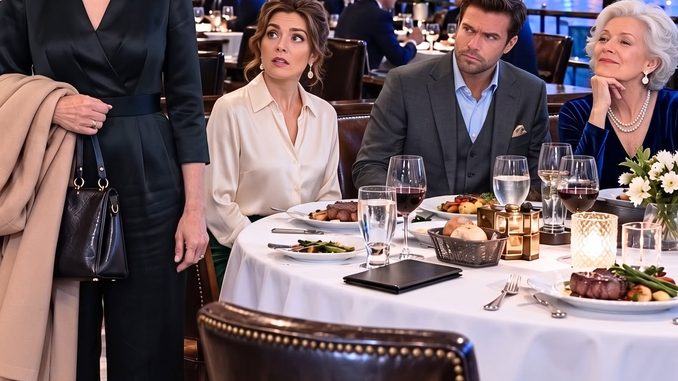
Then came dinner with Preston’s mother, Deborah. Within minutes, she was commenting on my clothes, my age, how often I contacted Natalie, and eventually the fact that one woman lived alone in a four-bedroom house.
“Seems like an awful lot of space.”
When Deborah suggested some mothers didn’t know when to step aside so their children could build lives of their own, I finally put down my fork. Natalie knew exactly what the comment meant, yet instead of defending me, she sighed as though I were the problem.
“Mom, she doesn’t mean anything by it.”
Before I could answer, Preston leaned forward.
“If you don’t appreciate my mother’s remarks, pay the check and leave.”
I looked at Natalie and waited for her to say something. She remained silent, so I smiled, paid for the entire dinner, left a generous tip, and walked out without arguing.
On the drive home, my anger slowly turned into clarity. I realized I was still paying Natalie’s car payment three years after offering temporary help, while Preston’s supposedly short-term storage unit had been charging my card for eighteen months.
That night, I removed my payment method from his storage account. The next morning, I stopped the automatic transfer for Natalie’s car.
Within days, both of them confronted me. I calmly explained that dinner hadn’t caused my decision; it had simply made me recognize how thoroughly my generosity had become an expectation.
After Preston left my house, I remembered the conversations about removing walls, converting my study into a nursery, and reshaping the backyard. Instead of calling Natalie again, I contacted a real estate attorney named Margaret Ellis.
I wasn’t planning to sell my home. I wanted to protect it.
Margaret reviewed my estate arrangements and assured me that Natalie had no automatic claim to the property while I was alive. Then she asked whether David had left separate documents concerning the house.
I assumed everything had passed directly to me after his death, but Margaret’s question bothered me enough to search David’s old filing cabinet. Buried behind years of tax records and mortgage statements, I discovered a thin blue folder I had never seen before.
Inside was a deed dated 1998.
Only one name appeared on it.
David Bennett.
Not mine.
Margaret searched deeper into the folder and found something else: an old envelope, yellowed around the edges, with my name written across the front in David’s handwriting.
CLAIRE: ONLY IF SOMETHING HAPPENS WITH THE HOUSE.
My hands went cold.
David had been dead for six years.
And somehow, he had left me a warning I had never known existed.
Part 2: The Daughter I Never Knew Existed
I couldn’t bring myself to open David’s envelope immediately. Six years after his death, seeing his handwriting felt less like finding an old document and more like hearing his voice through a door I wasn’t ready to open.
Before I could decide, Natalie called.
“Mom, are you talking to a lawyer?”
I glanced at Margaret.
“How do you know that?”
“Preston saw a car at your house.”
Natalie complained that I was turning a family disagreement into something much bigger. Then, while defending herself, she said something that changed the entire conversation.
“Nobody is trying to take the house from you before you’re ready.”
Before I was ready.
“What exactly do you think happens to my house?”
After a long silence, she finally answered.
“Eventually, it comes to me.”
Natalie explained that David had told her years earlier, while she was still in college, that she would someday have the house. Preston knew about the promise too, which suddenly explained everything: the renovations, the nursery, Deborah’s remarks, and the way they discussed my home as though they were simply waiting for me to surrender it.
I ended the call and opened David’s envelope.
His letter began with a warning. If I was reading it, he wrote, then something had probably gone wrong involving either the house, Natalie, or both.
David explained that he had once promised Natalie the property, hoping the security of a future home would stop her from making reckless financial decisions. During college, she had accumulated more than $40,000 in private debt through credit cards, personal loans, and money borrowed from friends.
He quietly paid off several debts without ever telling me. Two years later, he discovered she was hiding financial problems again, except this time Preston was involved in what David called a speculative property arrangement.
Then I reached the sentence that made my hands shake.
“I told Natalie the house would be hers because I thought security might stop her from chasing risky promises. Instead, Preston began treating the promise like collateral.”
David’s final warning hurt even more. He knew my instinct would be to avoid conflict, but he begged me not to remain silent if Natalie ever began planning around the house while I was still living there.
“The house was never meant to cost you your dignity.”
I cried, but I was angry too. David had hidden Natalie’s debts, Preston’s behavior, and his promise about the house because he had tried to preserve peace in exactly the same way I always had.
Then Margaret noticed an unusual reference attached to the old deed. She needed time to retrieve the original property records, so for the next week I said nothing to Natalie, Preston, or Deborah.
When Margaret finally called, her voice immediately told me she had found something significant.
“The land originally belonged to David’s mother, Eleanor Bennett.”
According to the documents, Eleanor had placed the property into a private family trust before she died. David controlled the house and had the right to live there, while the trust guaranteed that his spouse, meaning me, could remain in the property for the rest of my life.
But the house would not automatically pass to Natalie after my death.
“Then who gets it?”
Margaret hesitated.
“A woman named Rebecca Dawson.”
I had never heard the name.
“Who is Rebecca Dawson?”
There was another pause before Margaret answered.
“Claire, according to the original trust documents, Rebecca Dawson is David’s daughter.”
I stopped breathing.
“That’s impossible.”
The documents identified Rebecca as Eleanor Bennett’s granddaughter and David’s biological child. I insisted there had to be a mistake because David and I had been married for thirty-eight years, and he had never told me he had another daughter.
Then an old memory surfaced.
Years earlier, I had seen a photograph of nineteen-year-old David standing beside a young woman. He had casually described her as a high school friend, and I had never thought to ask her name.
Margaret arranged a meeting.
When Rebecca Dawson walked into her office, she was fifty-seven years old and visibly nervous. Then she looked directly at me, and every remaining doubt disappeared.
She had David’s eyes.
Not eyes that merely resembled his.
The same hazel color. The same expression. Even the same creases at the corners.
I stared at her across the table.
“You’re David’s daughter?”
Rebecca slowly nodded.
“Yes.”
And then she told me something even more disturbing.
Natalie already knew she existed.
Part 3: Natalie Had Known for Years
Rebecca explained that David had been only nineteen when she was born, while her mother was seventeen. Their families separated them, and Rebecca grew up with her mother and stepfather, maintaining only occasional contact with David once she became an adult.
I struggled to understand how my husband could have hidden something so enormous throughout our marriage.
“Why didn’t he tell me?”
“I asked him that once.”
“What did he say?”
Rebecca lowered her eyes.
“He said he was ashamed he had waited so long that he no longer knew how to begin.”
It sounded painfully like David. He could repair almost anything, but whenever a conversation frightened him, silence became his favorite solution.
Then I asked whether Natalie had known about her.
“I thought she did.”
Rebecca explained that Natalie had contacted her approximately five years earlier, not long after David died. She had asked Rebecca to sign paperwork supposedly connected to his estate.
Rebecca reached into her purse and produced copies of the documents. Natalie had described them as a simple waiver that would prevent complications because the house had always been intended for her.
“Did you sign it?”
“No.”
David had once warned Rebecca never to sign anything involving the property without first consulting an attorney. That single warning had prevented Natalie from quietly eliminating Rebecca’s potential claim.
The realization was devastating. Natalie hadn’t merely known Rebecca existed; she had understood that another person might have rights involving the house and deliberately kept that information from me.
I called my daughter that evening.
“Come over tomorrow. Alone.”
When Natalie entered my kitchen the next morning, she immediately noticed David’s blue folder on the table. The change in her expression told me everything before I asked a single question.
I placed David’s letter beside Rebecca’s unsigned waiver.
“Who is Rebecca Dawson?”
Natalie’s eyes filled with tears.
“You already know.”
She admitted David had told her about Rebecca while he was dying from pancreatic cancer. He had asked Natalie not to tell me, and she had obeyed him even after his death.
“Apparently you knew how to contact Rebecca and ask her to give up her rights.”
Natalie covered her face.
“Preston said we needed to protect everything.”
There was his name again.
Preston had convinced her that if Rebecca appeared later, the trust and the house could become tangled in a legal dispute. Instead of telling me the truth, they had tried to remove the problem without my knowledge.
“You were planning renovations to a house that legally might not even become yours.”
“Dad promised me.”
“Your father made a mistake.”
Her sadness immediately turned defensive.
“You don’t understand.”
“Then explain.”
Natalie stood abruptly.
“We have debt.”
I asked how much, but she avoided answering until I forced her to give me a number.
“Almost three hundred thousand.”
I stared at her.
Preston’s property investments had failed, leaving them buried beneath private loans, refinanced vehicles, credit-card balances, and other obligations. Then Natalie revealed the detail that finally connected their financial disaster to my house.
Three months before the steakhouse dinner, Preston had borrowed money based partly on an expected future inheritance.
My property.
“He used my house as part of a financial statement?”
“Not exactly.”
“What does not exactly mean?”
“He listed expected family assets.”
That was enough.
For months, Preston had been discussing renovations, measuring rooms, and allowing his mother to suggest I occupied too much space because my continued presence interfered with a financial future they had already constructed around my death.
I stood.
“You need to leave.”
Natalie began crying.
“What are we supposed to do?”
Looking at her, I still saw the little girl I had carried upstairs after she fell asleep watching movies, the teenager whose prom dress I had altered by hand, and the daughter I had rescued whenever she needed help. But for the first time, I understood that helping someone and protecting them from every consequence were not the same thing.
“I don’t know.”
She stared at me through her tears.
“But you are not going to solve it by planning your future around my absence.”
Two weeks later, the wedding was postponed.
Not because of anything I did.
Preston’s business collapsed.
One partner sued him, then another creditor appeared, and suddenly the future they had built around money they didn’t possess began falling apart. Deborah called me furious and demanded that I rescue them again.
“You could help them.”
“I have.”
“Then help again.”
“No.”
Three months passed.
Natalie moved into a small apartment, while Preston returned to Deborah’s house. I assumed my daughter would continue defending him.
Then one Sunday morning, Natalie called.
“I gave the ring back.”

Part 4: The House Was Never Hers Alone
When Natalie told me she had returned Preston’s ring, I didn’t celebrate or remind her that I had warned her. I simply listened as she admitted that she had spent weeks thinking about David, Rebecca, the unsigned waiver, and the dinner that had exposed how much she had changed.
“I became someone I don’t like.”
That sentence meant more to me than any apology because, for the first time, Natalie wasn’t blaming Preston, Deborah, me, or the trust. She was finally looking honestly at her own decisions, but our family still had one unresolved issue involving the house.
Margaret had completed her review of Eleanor Bennett’s original trust and discovered another important provision. Rebecca held the primary claim to the property after my death, but if she declined it, the house would pass equally among David Bennett’s living descendants rather than automatically going to Natalie.
Rebecca came to my house one afternoon, and we sat beside the same kitchen island where I had once overheard Natalie and Preston discussing their renovation plans. As she ran her fingertips across the wood, she smiled at something only she seemed to remember.
“Dad described this kitchen.”
“He remodeled it twice.”
“He said you hated the first cabinets.”
“They were orange.”
We both laughed, and for a brief moment, sharing those memories made David feel present in the room with us. Then Rebecca became serious and told me she had already decided what she wanted to do about the property.
“I don’t want the house.”
“You’re entitled to it.”
“I already have a home.”
Rebecca explained that she didn’t want her first genuine connection with me to become an argument over property after my death. After spending decades separated from this side of her family, what she wanted from me was much simpler than an inheritance.
“Maybe coffee sometimes.”
Rebecca formally declined her future claim, and Margaret prepared the necessary documents. I assumed that decision meant Natalie would eventually receive the entire house, but the trust still had another surprise waiting for us.
Margaret called us into her office, and Natalie joined us because she and I had cautiously started speaking again. We weren’t pretending the past had disappeared, but we were slowly rebuilding our relationship with more honesty than we had ever shared before.
“Because Rebecca declined her claim, the property transfers under the descendant clause.”
“So eventually it comes to me.”
“Not entirely.”
“What?”
“Your father had two daughters. Rebecca has a child.”
“A son. His name is Aaron.”
Aaron was thirty-three, almost Preston’s age, and he was married with a baby on the way. Under Eleanor’s trust, Natalie and Aaron would ultimately share the property interest after my death, which meant the house Natalie and Preston had once treated as a guaranteed inheritance had never been hers alone.
Natalie remained silent for several seconds before suddenly beginning to laugh. There was no bitterness in her reaction, only disbelief as she finally understood how absurd all those years of planning had been.
“All that planning. The nursery. The wall. Preston even measured the backyard.”
“All that time, we were behaving like we owned something we didn’t even understand.”
I reached across the table, and Natalie took my hand as the reality settled between us. For years, she had organized part of her future around a house whose ownership history she had never truly understood.
A year later, I made a decision nobody expected because I neither sold the property nor preserved it untouched like a museum of our family’s mistakes. Instead, I used part of my savings to transform the upstairs into a comfortable separate suite, while Rebecca began visiting regularly and Aaron eventually brought his wife and baby daughter to meet us.
Natalie rebuilt her life in a different way by purchasing a smaller car, paying her own bills, moving into a modest condo, and gradually repairing her finances without expecting me to rescue her. Our relationship changed as well, becoming less dependent on obligation and more grounded in honesty.
One evening, Natalie and I sat in the backyard while Aaron’s little daughter chased fireflies across the grass. Natalie looked toward the house that had once occupied so much of her imagination and smiled.
“Do you know what’s funny?”
“What?”
“I don’t want it anymore.”
“Good.”
She laughed before becoming quiet again, and I could tell there was something else she had been carrying for a long time. When she finally spoke, her voice was softer.
“I spent years believing Dad’s promise meant he loved me.”
“And when I thought you might change everything, it felt like you were taking that love away from me.”
I squeezed her hand, understanding for the first time why David’s promise had become so emotionally important to her. The house had stopped being just property in Natalie’s mind and had become evidence that her father had chosen her future before he died.
“A house is a terrible place to keep proof that somebody loved you.”
Natalie nodded and watched the little girl running across the yard before asking something I had never seriously considered.
“Do you ever wish you had never found Dad’s letter?”
I looked toward the house and thought about everything that letter had uncovered: David’s secrecy, Natalie’s entitlement, Preston’s financial desperation, Rebecca’s existence, and my lifelong habit of remaining silent to preserve peace. For a long time, I had believed that opening the envelope was what fractured our family.
Eventually, I understood that David’s letter hadn’t broken anything. Years of silence had nearly destroyed us, and the letter had simply forced that silence to end.
Part 5: The House Was Finally a Home
Two summers later, I invited everyone to dinner: Natalie, Rebecca, Aaron, his wife, their little daughter, and even Margaret. We gathered around the long dining room table that Deborah had once suggested was wasted on a woman living alone, but now every seat seemed to belong exactly where it was.
Halfway through dessert, the doorbell rang, and Natalie volunteered to answer it. She returned a moment later carrying an envelope with my name on the front and no return address.
“Mom, this is for you.”
The letter was from Preston. He was living in Arizona, working for a construction company, and slowly paying down the debt left behind after his business collapsed.
He didn’t ask me to forgive him, nor did he blame anyone for what had happened. Instead, he included one sentence about the past that explained more than any apology could have.
“I thought your house was our future because I was too afraid to build one myself.”
I folded the note and handed it to Natalie. She read it quietly before looking back at me.
“Do you want me to throw it away?”
I looked around the table at Rebecca laughing with Aaron, his daughter feeding strawberries to the dog, and Natalie sitting comfortably beside me. The house that had once made me wonder whether people valued the property more than they valued me was finally filled with people who no longer treated it as something waiting to be divided.
“No. Put it in the blue folder.”
Over time, that folder became more than a collection of legal documents. I added David’s letter, the trust paperwork, Rebecca’s unsigned waiver, Preston’s note, and eventually a letter of my own.
Years later, Aaron’s daughter asked why I kept the folder locked inside my desk. I had come to think of her as my granddaughter, and I promised she could read everything when she was old enough to understand it.
“What’s inside?”
“A family story.”
“Is it happy?”
I thought about the steakhouse where Preston had told me to pay the bill and leave, and about Natalie sitting silently while he did it. I remembered the night I came home and finally stopped financing everyone else’s choices, followed by all the secrets that surfaced once I began protecting myself.
“Eventually.”
For most of my life, I had believed peace meant staying quiet whenever speaking honestly might create conflict. I also believed love meant helping whenever someone needed me and that generosity was somehow less meaningful if I kept track of how people treated me in return.
I had misunderstood all three. Peace without honesty eventually becomes resentment, help without boundaries can become dependence, and generosity without respect eventually stops feeling like generosity to the people receiving it.
The most important thing I changed after that dinner wasn’t Natalie’s car payment, Preston’s storage account, my estate plan, or even the future ownership of the house. I changed the rule I had quietly followed for most of my adult life: that loving someone required me to tolerate disrespect from them.
Once I stopped being afraid that boundaries might cost me my family, I discovered which relationships were capable of surviving honesty. Natalie and I rebuilt ours, Rebecca became part of a family she should never have been hidden from, and Aaron brought a new generation into a house that had nearly become a symbol of everything dividing us.
The house itself remained mostly unchanged. The kitchen wall was still standing, my study never became the nursery Preston had imagined, and David’s photograph remained on the mantel beside newer photographs of Natalie, Rebecca, Aaron, and his daughter.
Sometimes I still talked to David when I passed his picture. I missed him, but I was also still angry that he had hidden so much because he believed silence would protect us.
“You should have told me.”
Of course, there was never an answer. Still, I sometimes imagined him admitting that he knew, and I knew exactly what I would tell him in return.
“Keeping the peace nearly cost us everything.”
In the end, the house didn’t belong to Preston or Deborah, and while I was alive, it didn’t belong to Natalie, Rebecca, Aaron, or some future grandchild either. For the first time in years, I understood that without guilt or uncertainty.
It was my home, and nobody else had the right to plan my disappearance in order to claim their future. Whatever eventually happened to those rooms would be decided by people who had learned to value one another more than the property surrounding them.
Leave a Reply